
A Practical Buyer’s Guide to CNC Machining Center Spindle Tapers
Pine +86 15010397162
sales9@dgbica.com
1. Introduction: Understanding CNC Spindle Tapers
When purchasing a CNC machining center, the spindle taper is one of the important specifications to consider. BT30, BT40, and BT50 are three common spindle taper types used in CNC machining centers.
What is the difference between them? Does a larger spindle taper always mean better machining performance? The answer is no. Different spindle tapers are designed for different machining requirements. Choosing the right one depends on workpiece materials, cutting conditions, machining accuracy, production efficiency, and budget.
This guide explains the differences between BT30, BT40, and BT50 spindles and helps buyers make a more informed purchasing decision.
2. What Is a BT Spindle Taper?
BT is a widely used tool holder interface in CNC machine tools. It features a 7/24 steep-taper design that allows the tool holder to connect securely with the spindle. The BT interface is commonly used in vertical machining centers, horizontal machining centers, and other CNC milling machines.
The number following BT identifies the taper size series:
- · BT30: A compact spindle taper commonly used for high-speed and light-duty machining.
- · BT40: A medium-sized spindle taper widely used for general-purpose machining.
- · BT50: A larger spindle taper commonly used for heavy-duty machining and higher cutting loads.
The spindle taper is only one part of machine performance. Spindle power, torque, rotational speed, bearing configuration, machine rigidity, and tooling also play important roles.
3. BT30 vs. BT40 vs. BT50: Main Differences
3.1 BT30 Spindle
BT30 is a compact spindle taper commonly found in small and high-speed CNC machining centers.
Main features:
- · Compact structure and relatively low tool holder weight.
- · Suitable for high-speed machining applications.
- · Commonly used for aluminum alloy and other non-ferrous materials.
- · Suitable for drilling, tapping, milling, and precision finishing.
- · Often used in small workshops and automated production lines.
Typical applications include aluminum components, electronic equipment parts, small precision components, light-duty mold processing, and drilling and tapping applications.
BT30 is a good choice when high spindle speed, fast tool changes, and efficient light cutting are important.
3.2 BT40 Spindle
BT40 is one of the most widely used spindle taper types in vertical machining centers. It provides a practical balance between machining capability, spindle speed, rigidity, and versatility.
Main features:
- · Greater tool holder capacity than BT30.
- · Suitable for a wide range of machining operations.
- · Available in different spindle speed and power configurations.
- · Suitable for both rough machining and finishing.
- · Compatible with many commonly used CNC tool holders.
Typical applications include automotive components, mechanical parts, general steel machining, mold manufacturing, stainless steel components, and industrial equipment parts.
BT40 is a versatile choice for manufacturers who need to process different materials and workpieces using one machine.
3.3 BT50 Spindle
BT50 is a larger spindle taper designed for applications requiring greater tool holding capability and higher cutting loads. It is commonly used in heavy-duty machining centers and large CNC milling machines.
Main features:
- · Larger tool holder interface.
- · Suitable for heavy cutting operations.
- · Commonly paired with higher-power spindle configurations.
- · Suitable for machining large and heavy workpieces.
- · Provides a robust tool connection for demanding cutting conditions.
Typical applications include large mechanical components, heavy steel parts, cast iron components, large molds, industrial machinery parts, and heavy-duty milling operations.
BT50 is suitable for manufacturers who prioritize cutting capability, rigidity, and heavy material removal.
4. Comparison Table: BT30 vs. BT40 vs. BT50
| Item | BT30 | BT40 | BT50 |
| Taper series | Small | Medium | Large |
| Tool holder | Compact | Medium | Large |
| Typical application | Light cutting | General machining | Heavy cutting |
| Common materials | Aluminum, copper, plastics | Aluminum, steel, stainless steel | Steel, cast iron, heavy materials |
| Spindle speed | Often high | Wide speed range | Often moderate |
| Cutting load | Light | Medium to heavy | Heavy |
| Typical machine | Compact VMC | Standard VMC | Heavy-duty VMC |
Note: The table shows typical application characteristics, not fixed technical limits. Actual spindle speed, torque, power, and cutting capacity depend on the specific machine configuration.
5. How to Choose the Right Spindle Taper?
5.1 Workpiece Material
Different materials require different cutting forces and machining conditions.
- · Aluminum alloy: BT30 or BT40 is commonly suitable, especially for high-speed machining.
- · Carbon steel: BT40 or BT50 may be preferred depending on cutting depth and material removal requirements.
- · Stainless steel: BT40 or BT50 can be suitable depending on the required spindle torque and machine rigidity.
- · Cast iron: BT40 or BT50 is commonly used for different cutting conditions.
5.2 Machining Process
Consider the main operations your machine will perform.
- · Drilling and tapping: BT30 or BT40 may be sufficient for many applications.
- · High-speed milling: BT30 or high-speed BT40 configurations can be suitable.
- · Heavy milling: BT40 or BT50 may be more appropriate.
- · Large-scale mold machining: Consider BT40 or BT50 according to the cutting requirements.
5.3 Spindle Speed and Torque
High spindle speed is not the only indicator of good machining performance. For aluminum finishing, high rotational speed may be beneficial. For heavy steel cutting, sufficient spindle torque and power are usually more important. Buyers should check the spindle’s power and torque curves rather than comparing maximum RPM alone.
5.4 Workpiece Size and Machine Rigidity
Large and heavy workpieces generally require a machine with sufficient structural rigidity, table load capacity, and travel range. A larger spindle taper alone cannot guarantee better machining performance. The machine structure, spindle bearings, tool holder, and cutting parameters must work together.
5.5 Production Requirements and Budget
If your workshop mainly processes small precision components, investing in a large BT50 machine may not be necessary. For general-purpose machining, BT40 offers a versatile solution for many manufacturing workshops. For demanding heavy-duty machining, BT50 may provide a more suitable configuration.
6. Common Mistakes When Choosing a CNC Spindle
Mistake 1: Assuming BT50 Is Always Better Than BT40
A larger taper does not automatically mean higher machining accuracy or productivity. The machine must match the actual application.
Mistake 2: Focusing Only on Maximum Spindle Speed
Maximum RPM does not tell the whole story. Spindle torque, power, and the usable speed range are equally important.
Mistake 3: Ignoring Tool Holder Compatibility
Make sure your existing tool holders, cutting tools, and automatic tool changer are compatible with the selected spindle interface.
Mistake 4: Ignoring Machine Rigidity
Heavy cutting requires sufficient rigidity throughout the entire machine structure, not just a larger spindle taper.
7. Our CNC Machining Center Solutions
As a CNC machine tool supplier from China, we provide different machining center configurations to meet various industrial manufacturing requirements.
Our product range includes:
- · BT30 Vertical Machining Centers
- · BT40 Vertical Machining Centers
- · BT50 Vertical Machining Centers
- · 4-Axis CNC Machining Centers
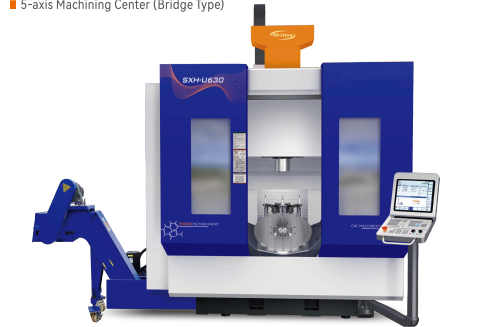
- · 5-Axis CNC Machining Centers
- · Customized CNC Machining Solutions
Different configurations can be discussed according to your requirements, including CNC control systems such as FANUC, Mitsubishi, and Syntec; spindle speed and power; linear guideway or box way structures; automatic tool changers with different tool capacities; and optional 4th-axis rotary tables and other accessories.
We also support customized machine configurations, export documentation, technical communication, and spare parts supply.
8. Conclusion: Which Spindle Should You Choose?
There is no single best spindle taper for every machining application.
- · Choose BT30 for compact machines, high-speed machining, and light-duty applications.
- · Choose BT40 for versatile machining and general industrial production.
- · Choose BT50 for heavy-duty machining and applications requiring greater cutting capability.
The best machine is the one that matches your actual workpiece, materials, machining processes, and production requirements.
Looking for the Right CNC Machining Center?
Send us your workpiece drawings, material specifications, and machining requirements. Our team will help you select a suitable machine configuration and provide a quotation. Contact us today to discuss your CNC machining requirements.
Technical note: All descriptions of typical applications are general guidance. Confirm the spindle interface, speed, torque, power, tool holder, and ATC compatibility against the specific machine quotation and technical specification.
Post time: Nov-14-2026

