
The Right Grinding Machine Is Not Chosen by Size — It Is Chosen by the Part
Pine ZhongWhatsApp:+86 15010397162 E-mail:sales6@yuhenmachine.com
When customers contact us about grinding machines, one of the most common conversations starts like this:
“We have a shaft, diameter 30mm, length 300mm. Which grinding machine do we need?”
At first, it looks like a simple question. Many people naturally think that the size of the workpiece should decide the machine.
But after working with different manufacturers, I found that this is usually where misunderstandings begin.
A 30mm × 300mm part could be a bearing roller, a textile spindle, or a precision transmission shaft. The dimensions may look similar, but the grinding process can be completely different.
It is similar to choosing transportation. A truck and a sports car can both move from point A to point B, but they are designed for completely different jobs.
The same applies to grinding machines.
The most important questions are not:
“How large is the workpiece?”
The real questions are:
● What type of surface needs grinding?
● How many pieces need to be produced?
● What accuracy is required?
● Is the customer focusing on flexibility or production efficiency?
A suitable grinding machine is always the result of matching the machine with the manufacturing process.
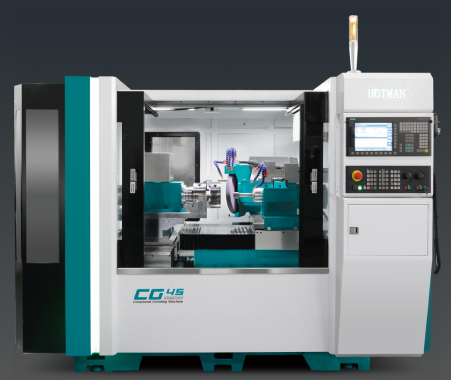
Why Grinding Is Often the Most Important Step in Precision Manufacturing
A typical manufacturing process may look like this:
Forging / Casting → Turning → Heat Treatment → Grinding → Final Inspection
Turning is usually the first machining process because it removes material quickly and creates the basic shape.
However, after heat treatment, the material becomes harder and dimensional changes may occur. At this stage, grinding becomes necessary to achieve the final requirements.
Grinding is responsible for controlling:
● Dimensional accuracy
● Roundness
● Cylindricity
● Surface roughness
In industries such as bearings, automotive components, and precision machinery, a difference of several microns can affect:
● Vibration level
● Service life
● Noise
● Operating stability
For a normal mechanical part, 0.01mm may seem insignificant.
For a high-speed rotating component, it can become the difference between a reliable product and a production problem.
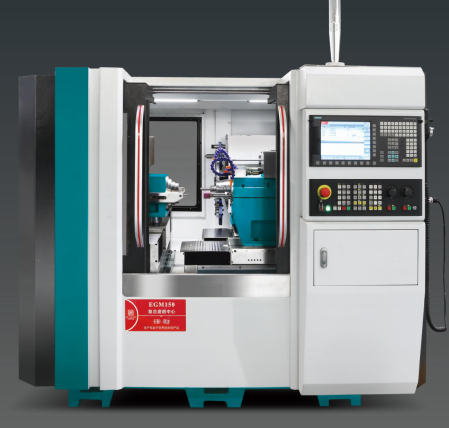
1. Centerless Grinding Machine: Built for High-Volume Production
A Centerless Grinding Machine has one major characteristic:
The workpiece is ground without being held between centers.
Unlike traditional cylindrical grinding, the workpiece does not require:
● Center holes
● Chucking
● Complex clamping operations
The grinding process mainly depends on three components:
● Grinding Wheel
● Regulating Wheel
● Work Rest Blade
The grinding wheel removes material, while the regulating wheel controls the rotation speed and feeding movement of the workpiece.
This simple working principle gives centerless grinding a major advantage:
High productivity.
For factories producing thousands or millions of similar parts, this is extremely valuable.
Typical applications include:
● Bearing rollers
● Needle rollers
● Piston pins
● Motor shafts
● Hydraulic rods
For example, a bearing manufacturer producing large quantities of rollers every month cannot spend most of its time loading and unloading individual parts. In this situation, centerless grinding becomes a very practical solution.
But Centerless Grinding Is Not Suitable for Every Shaft
Sometimes customers believe:
“If centerless grinding is faster, why not use it for everything?”
This is a common misunderstanding.
Centerless grinding performs extremely well on parts with simple cylindrical shapes.
However, when the component has:
● Multiple diameters
● Shoulder sections
● Complex geometry
● Strict relationship requirements between different surfaces
the situation changes.
For example, a simple bearing roller is a natural application for centerless grinding.
A stepped shaft with several precision surfaces may require a different approach.
The fastest machine is not always the most efficient machine.
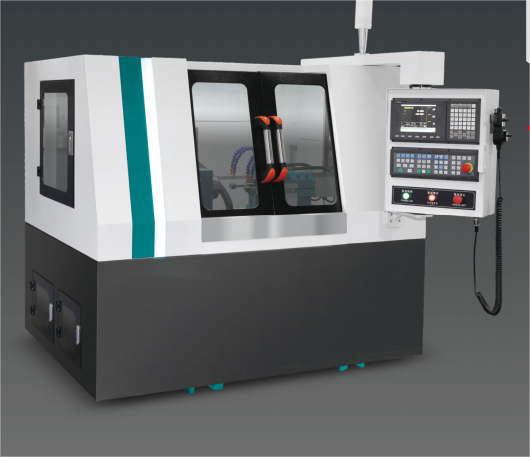
2. Cylindrical Grinding Machine: The Choice for Precision Shafts
A Cylindrical Grinding Machine works differently from a centerless grinder.
The workpiece is normally supported by:
● Headstock
● Tailstock
● Chuck
The workpiece rotates while the grinding wheel performs precision machining.
The biggest advantage of cylindrical grinding is flexibility.
It can handle:
● External cylindrical surfaces
● Taper surfaces
● Shoulder areas
● Precision shaft sections
Typical applications include:
● Machine tool spindles
● Gear shafts
● Motor shafts
● Textile spindles
● Precision mechanical components
A Practical Example: Textile Spindle Manufacturing
Recently, we discussed a typical application from the textile industry.
The customer produces textile covering spindles with:
● Diameter around 30mm
● Length around 300mm
● Production quantity around 75,000 pieces/month
● Target cycle time around 40 seconds per piece
At first glance, someone might immediately think:
“The part is long and thin. Maybe centerless grinding?”
But after looking at the component design, the situation becomes clearer.
The spindle is not a simple straight shaft.
It has:
● Different diameter sections
● Precision fitting areas
● Requirements for stable rotation
For this kind of component, the important factor is not only grinding speed. The relationship between different diameters and the overall concentricity are also critical.
In this case, an automated CNC cylindrical grinding solution may provide better control.
This is something we often see in real projects:
The customer’s first idea is usually based on the appearance of the part.
The final solution should be based on the function of the part.
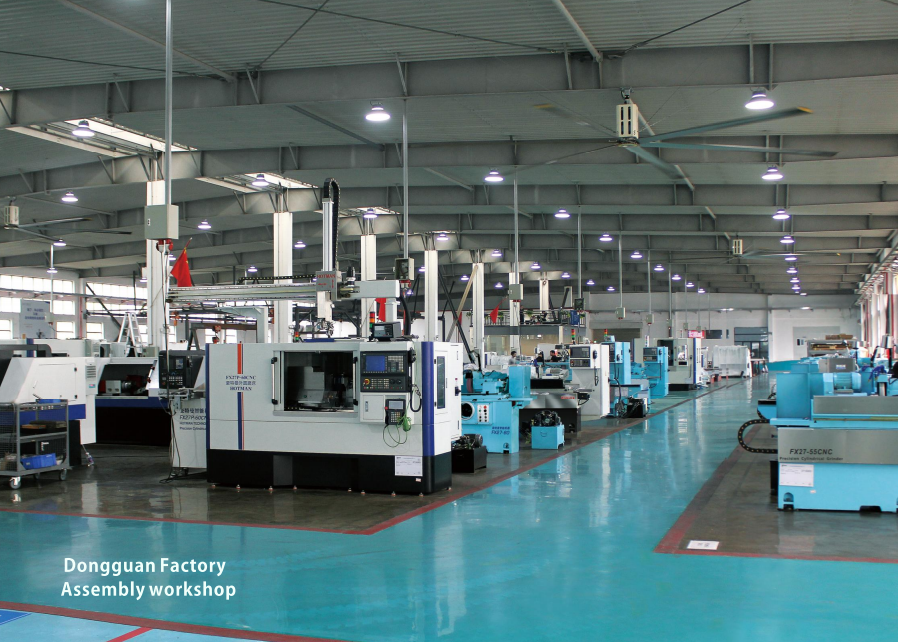
3. Crankshaft Grinding Machine: A Special Machine for a Special Component
A crankshaft is one of the most unique shaft components in manufacturing.
A normal shaft usually has one rotation center.
A crankshaft has multiple offset positions because of:
● Main journals
● Crankpins
These different journal positions require precise control during grinding.
Crankshaft grinding machines are specially developed for industries such as:
● Automotive engines
● Diesel engines
● Marine engines
Typical features include:
● Multi-axis CNC control
● High rigidity machine structure
● Automatic measurement systems
Because crankshaft machining involves complex movement and high precision requirements, these machines are generally positioned in a higher price range compared with standard grinding machines.
How Do You Choose the Right Grinding Machine?
A simple guideline:
Choose Centerless Grinding When:
● Production quantity is high
● Parts have simple cylindrical geometry
● Production efficiency is the main target
Typical parts:
● Bearing rollers
● Pins
● Straight shafts
Choose Cylindrical Grinding When:
● Precision is the priority
● Parts have multiple diameter sections
● Concentricity between surfaces is important
Typical parts:
● Spindles
● Gear shafts
● Precision components
Choose Crankshaft Grinding When:
● The component is an engine crankshaft
● Offset journals need machining
● Automotive engine precision is required
The Most Common Mistake: Asking for Price Before Discussing Process
In many inquiries, the first question from a buyer is:
“What is the price of the machine?”
Of course, price is important.
But before discussing price, an experienced manufacturer usually needs to understand:
● What material is being processed?
● What is the required tolerance?
● How many parts are produced monthly?
● Which areas need grinding?
● What is the expected cycle time?
Because a low-cost machine that cannot meet production requirements is not really economical.
In manufacturing, the cheapest purchase price does not always mean the lowest production cost.
Sometimes the machine that saves money at the beginning creates more costs later through lower efficiency, unstable quality, and additional labor.
Final Thoughts
Selecting a grinding machine is not about choosing the biggest machine or the most expensive machine.
It is about finding the machine that matches:
● Part design
● Production volume
● Accuracy requirements
● Manufacturing goals
After years of communicating with manufacturers, one thing becomes clear:
A good grinding machine supplier should not only provide equipment. The supplier should understand the customer’s production problem and help find a practical solution.
Because in the end, manufacturers are not buying a machine.
They are buying a better way to make their products.
Post time: Aug-21-2026

