
A CNC vertical machining center (VMC) is one of the most widely used CNC machine tools for precision machining. With a vertically oriented spindle, automatic tool changing system, CNC control, and rigid machine structure, a vertical machining center can perform multiple machining operations such as milling, drilling, tapping, boring, and reaming in a single setup.
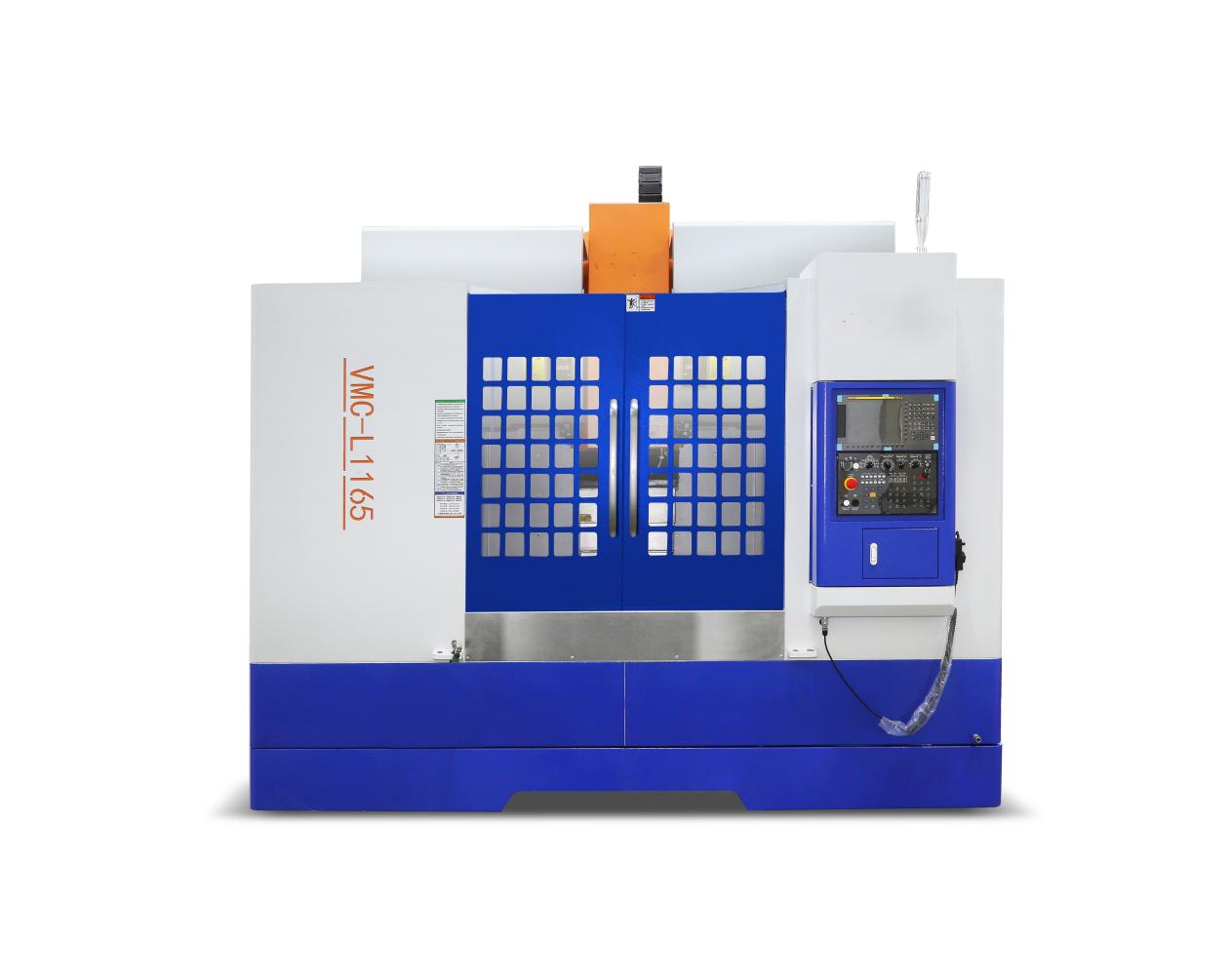
For manufacturers looking to improve machining accuracy, productivity, and production efficiency, choosing the right CNC vertical machining center is an important investment decision.
This guide explains how a CNC vertical machining center works, its main advantages, common applications, and the key specifications to consider before purchasing a machine.
What Is a CNC Vertical Machining Center?
A CNC Vertical Machining Center is a computer-controlled machine tool in which the main spindle is vertically oriented.
Unlike a traditional milling machine, a modern VMC normally integrates:
The CNC controller coordinates the movement of the X, Y, and Z axes according to the machining program.
Because several machining operations can be completed without removing the workpiece, a VMC can significantly reduce setup time and improve machining consistency.
How Does a CNC Vertical Machining Center Work?
The basic machining process can be divided into several steps.
1 Workpiece Setup
The workpiece is securely fixed on the machine table using a vise, fixture, chuck, or customized workholding system.
Correct workpiece positioning is essential for achieving high machining accuracy.
2 CNC Program Input
The machining program is transferred to the CNC controller.
The program contains information such as:
- Tool paths
- Cutting speed
- Feed rate
- Spindle speed
- Tool selection
- Machining coordinates
- Coolant commands
3 Automatic Tool Changing
When multiple machining operations are required, the ATC automatically changes tools according to the machining program.
For example, one workpiece may require:
- Face milling
- End milling
- Drilling
- Tapping
- Reaming
A VMC can complete these operations in sequence without manually changing the cutting tools.
4 Multi-Axis Machining
The machine moves the cutting tool and workpiece along the X, Y, and Z axes.
Depending on the machine configuration, additional rotary axes can also be integrated to support more complex machining operations.
Main Advantages of CNC Vertical Machining Centers
High Machining Accuracy
A rigid machine structure combined with precision linear guides, ball screws, servo systems, and CNC control can provide excellent positioning and repeatability.
This makes VMCs suitable for precision components, molds, dies, fixtures, and mechanical parts.
High Production Efficiency
A CNC vertical machining center can perform several machining processes in one setup.
This reduces:
- Manual tool changes
- Workpiece repositioning
- Setup time
- Operator intervention
As a result, manufacturers can increase production efficiency and reduce machining costs.
Excellent Flexibility
VMCs can machine a wide variety of materials and components.
Common materials include:
- Steel
- Stainless steel
- Aluminum
- Copper
- Cast iron
- Engineering plastics
By changing cutting tools and machining parameters, the same machine can be used for different production requirements.
Suitable for Batch Production
CNC vertical machining centers are particularly suitable for medium- and high-volume production. Once the CNC program has been verified, the same machining process can be repeated with consistent results.
Easy Integration with Automation
Modern VMCs can be integrated with automation equipment such as:
- Robot loading and unloading systems
- Pallet changers
- Automatic workpiece handling systems
- Bar or material feeding systems
- In-process inspection systems
This makes CNC vertical machining centers suitable for automated production lines and smart manufacturing.
Common Applications of CNC Vertical Machining Centers
Mold and Die Manufacturing
VMCs are widely used in mold manufacturing because they can provide good dimensional accuracy and surface quality.
Typical applications include:
- Injection molds
- Die-casting molds
- Stamping dies
- Precision mold components
- Electrode machining
For mold manufacturers, high-speed spindle options and precise CNC control can be particularly important.
Automotive Parts
CNC vertical machining centers are commonly used to manufacture automotive components such as:
- Engine components
- Transmission parts
- Brake components
- Housings
- Fixtures
- Aluminum components
Aerospace Components
For aerospace manufacturing, machining accuracy, rigidity, thermal stability, and reliable CNC control are important considerations. VMCs can be used to machine structural components and other precision parts, depending on the machine’s working envelope and specifications.
General Mechanical Components
VMCs are also widely used for general engineering applications, including:
- Machine components
- Flanges
- Brackets
- Shafts
- Fixtures
- Plates
- Housings
CNC Vertical Machining Center vs. CNC Milling Machine
Although the terms are sometimes used interchangeably, a CNC vertical machining center normally provides more automation than a conventional CNC milling machine.
| Feature | CNC Milling Machine | CNC Vertical Machining Center |
|---|---|---|
| CNC control | Yes | Yes |
| Automatic tool changer | Optional/limited | Standard on many models |
| Multiple machining operations | Yes | Yes |
| Automatic tool changing | Usually limited | Yes |
| Production efficiency | Medium | High |
| Automation capability | Moderate | High |
| Batch production | Suitable | Excellent |
For manufacturers performing repeated drilling, milling, tapping, and boring operations, a VMC is often the more efficient solution.
Key Specifications When Choosing a CNC Vertical Machining Center
Selecting a VMC should be based on the actual workpiece and machining process rather than simply choosing the largest or fastest machine.
1. Table Size
The machine table must be large enough to accommodate the workpiece and fixture.
When selecting table size, consider both the workpiece dimensions and the space required for clamping.
2. X, Y, and Z Axis Travel
Axis travel determines the maximum machining envelope of the machine.
For example:
- X-axis travel determines the available left-to-right machining range.
- Y-axis travel determines the front-to-back range.
- Z-axis travel determines the vertical machining range.
Always check the actual machining envelope rather than relying only on the table dimensions.
3. Spindle Speed
Spindle speed should match the material and cutting tools. High spindle speeds are useful for aluminum, small tools, and high-speed finishing, while lower speeds with high torque may be more appropriate for heavy cutting of steel and cast iron.
4. Spindle Motor Power
Spindle power affects the machine’s cutting capability. A higher spindle power can be advantageous for heavy-duty cutting, but power should be considered together with spindle torque, machine rigidity, and cutting conditions.
5. Automatic Tool Changer Capacity
ATC capacity is another important factor. Common configurations may include 12, 16, 20, 24, or more tools.
The required tool capacity depends on the complexity of the parts and the number of operations performed in one setup.
6. CNC Controller
The CNC control system directly affects machine operation and programming capabilities. Common CNC control brands include systems from Fanuc, Siemens, Mitsubishi, and other manufacturers.
When choosing a machine, consider:
- Programming requirements
- Operator familiarity
- Available functions
- Remote service capability
- Spare parts availability
7. Machine Rigidity
Machine rigidity is particularly important when machining hardened steel, cast iron, or large components.
A rigid machine structure helps reduce:
- Vibration
- Tool deflection
- Chatter
- Dimensional errors
8. Positioning Accuracy and Repeatability
For precision machining, check the manufacturer’s specifications for positioning accuracy and repeatability.
For high-precision applications, it may also be necessary to consider:
- Linear scale feedback
- Thermal compensation
- Ball screw accuracy
- Machine calibration
- Environmental temperature control
3-Axis vs. 4-Axis vs. 5-Axis Machining Centers
The appropriate number of axes depends on the geometry of the workpiece.
3-Axis CNC Vertical Machining Center
A standard 3-axis VMC moves along:
- X axis
- Y axis
- Z axis
It is suitable for many general machining applications and is usually the most economical configuration.
4-Axis Machining Center
A fourth rotary axis allows the workpiece to rotate during machining. This can reduce the number of setups required for certain components and improve productivity.
5-Axis Machining Center
A 5-axis machining center can control additional rotary movements, allowing the cutting tool to approach the workpiece from multiple directions.
It is particularly useful for:
- Complex molds
- Aerospace components
- Impellers
- Medical components
- Complex curved surfaces
However, a 5-axis machine is generally more expensive and requires more advanced programming and operation skills.
How Much Does a CNC Vertical Machining Center Cost?
The price of a CNC vertical machining center depends on many factors, including:
A basic 3-axis VMC may be suitable for general machining, while a high-speed, high-precision or multi-axis machine can require a significantly higher investment.
Therefore, it is better to compare machines based on total machining capability and production cost, rather than comparing purchase price alone.
How to Choose the Right CNC Vertical Machining Center
Before purchasing a VMC, prepare the following information:
Workpiece Information
Provide:
- Maximum workpiece length
- Maximum workpiece width
- Maximum workpiece height
- Workpiece weight
- Material
- Production quantity
Machining Requirements
Specify:
- Required machining operations
- Required tolerance
- Surface finish requirements
- Cutting tools
- Required spindle speed
- Required production cycle time
Automation Requirements
If you are planning automated production, specify whether you need:
- Automatic loading and unloading
- Robot integration
- Pallet changer
- Automatic measurement
- Chip conveyor
- Coolant filtration
This information allows the machine supplier to recommend a more suitable configuration.
Why Buy a CNC Vertical Machining Center from China?
China has become an important manufacturing base for CNC machine tools. Chinese CNC machining center manufacturers and suppliers can provide a wide range of configurations, from economical 3-axis machines to high-speed and multi-axis machining centers.
Potential advantages include:
- Competitive machine prices
- Wide range of configurations
- Customized machine options
- Strong manufacturing supply chains
- Availability of CNC components
- OEM and customized solutions
However, buyers should not evaluate suppliers based on price alone.
Important factors include:
- Machine accuracy
- Machine rigidity
- Component brands
- Quality control
- Factory experience
- Technical support
- Spare parts availability
- Warranty
- Installation and training
- After-sales service
Frequently Asked Questions About CNC Vertical Machining Centers
What is a CNC vertical machining center used for?
A CNC vertical machining center is used for milling, drilling, tapping, boring, reaming, and other precision machining operations. It is widely used in mold making, automotive, aerospace, machinery, electronics, and general manufacturing.
What is the difference between a VMC and a CNC mill?
A VMC is essentially a CNC milling machine with a vertical spindle and typically includes additional automation features such as an automatic tool changer and enclosed machining area.
Is a vertical machining center suitable for aluminum?
Yes. With an appropriate spindle speed, cutting tools, coolant system, and machining parameters, a VMC can efficiently machine aluminum components.
Can a VMC machine steel?
Yes. A properly configured VMC can machine carbon steel, alloy steel, stainless steel, and other metals. Machine rigidity, spindle torque, cutting tools, and cutting parameters should be selected according to the material.
How many axes does a vertical machining center have?
Most standard VMCs are 3-axis machines. 4-axis and 5-axis configurations are also available for more complex machining requirements.
How long does a CNC vertical machining center last?
The service life depends on machine construction, component quality, operating conditions, maintenance, and workload. Regular lubrication, proper maintenance, correct cutting parameters, and timely replacement of wear parts can significantly extend machine life.
Conclusion
A CNC Vertical Machining Center is a versatile and efficient solution for manufacturers that require accurate and repeatable machining.
The best machine is not necessarily the machine with the highest spindle speed or the largest table. The right choice should be based on the workpiece size, material, machining processes, accuracy requirements, production volume, automation requirements, and total operating cost.
If you are looking for a CNC Vertical Machining Center for milling, drilling, tapping, mold making, or precision component production, a professional machine tool supplier can help you select the appropriate machine configuration based on your actual machining requirements.
Contact us with your workpiece drawings, material, dimensions, required tolerance, and production requirements. We can recommend a suitable CNC vertical machining center configuration for your application.
Tel/WhatsApp/WeChat: +86 189-2577-9357 | Email: sales8@dgbica.com
Post time: Aug-19-2026

