
Introduction
When manufacturing molds and dies, two of the most commonly used machining technologies are Electrical Discharge Machining (EDM) and CNC Milling. Both processes play critical roles in mold production, but they serve different purposes and offer unique advantages.
Many mold manufacturers ask:
- Is EDM better than CNC milling?
- When should I use EDM instead of CNC?
- Which process provides higher accuracy?
- Which method is more cost-effective?
In this article, we compare EDM and CNC milling for mold making and explain when each technology should be used.
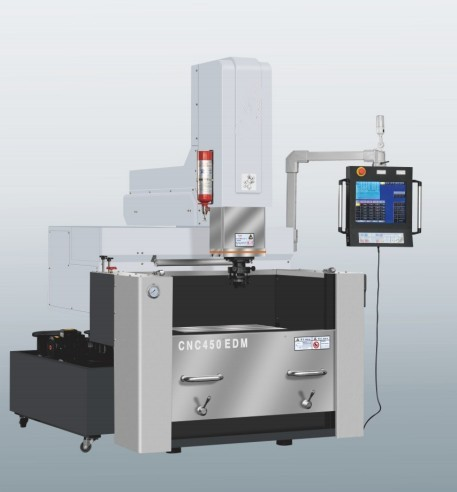
What Is CNC Milling?
CNC milling is a subtractive machining process that removes material using rotating cutting tools.
Modern CNC machining centers are widely used for:
- Mold base machining
- Rough cavity machining
- Contour machining
- Electrode manufacturing
- Precision component production
Advantages of CNC milling include:
- High material removal rate
- Fast machining speed
- Lower operating cost
- Excellent productivity for large material removal
However, CNC tools are limited by their physical geometry and cannot easily create sharp internal corners or extremely deep narrow cavities.
What Is EDM?
Electrical Discharge Machining (EDM) removes material through controlled electrical sparks between an electrode and the workpiece.
Unlike milling, EDM does not use mechanical cutting force.
EDM is commonly used for:
- Deep cavity machining
- Sharp corner creation
- Hardened steel machining
- Complex mold details
- Fine finishing operations
Because there is no direct tool contact, EDM can machine materials regardless of hardness.
EDM vs CNC Milling: Key Differences
1. Machining Principle
CNC Milling
- Material removed by rotating cutting tools
- Physical contact between tool and workpiece
- Generates cutting forces
EDM
- Material removed by electrical discharge
- No physical cutting force
- Suitable for delicate and complex geometries
2. Ability to Machine Hardened Steel
CNC Milling
Tool wear increases significantly when machining hardened materials above HRC 50–55.
EDM
Material hardness has little effect on machining capability.
For hardened mold steel, EDM offers a significant advantage.
3. Internal Corners and Complex Geometry
One of the biggest limitations of CNC milling is tool diameter.
Even small end mills leave corner radii.
For example:
- CNC milling cannot produce perfectly sharp internal corners.
- EDM can accurately reproduce the electrode shape, including sharp corners and intricate details.
4. Machining Speed
For roughing large amounts of material:
CNC milling is much faster.
Removing a large cavity entirely with EDM would be inefficient and costly.
Most mold manufacturers use CNC milling first and EDM later.
5. Surface Finish
Modern EDM technology can produce excellent surface finishes suitable for many mold applications.
Benefits include:
- Reduced polishing time
- Better cavity consistency
- Fine texture control
High-speed milling can also achieve good surface quality, but EDM often provides better results in difficult-to-reach areas.
6. Tool Wear
CNC Milling
- End mills wear during machining
- Tool replacement is required
EDM
- Electrode wear occurs
- Modern EDM systems can automatically compensate for electrode wear
The actual cost depends on the application.
7. Deep Cavity Machining
Deep and narrow cavities present challenges for milling tools.
Problems include:
- Tool deflection
- Vibration
- Tool breakage
EDM excels in these situations.
Comparison Table
| Feature | CNC Milling | EDM |
|---|---|---|
| Machining Speed | Excellent | Moderate |
| Hardened Steel Machining | Good | Excellent |
| Deep Cavities | Limited | Excellent |
| Sharp Internal Corners | Limited | Excellent |
| Material Removal Rate | Excellent | Moderate |
| Surface Finish | Good | Excellent |
| Tool Wear | Cutting Tool Wear | Electrode Wear |
| Complex Geometry | Good | Excellent |
When Should You Choose CNC Milling?
CNC milling is ideal when:
- Large amounts of material must be removed quickly
- Producing mold bases
- Machining open cavities
- Manufacturing electrodes
- Achieving high productivity
For rough machining operations, CNC milling is usually the most economical solution.
When Should You Choose EDM?
EDM is the better choice when:
- Machining hardened tool steel
- Creating deep cavities
- Producing sharp internal corners
- Manufacturing complex mold details
- Achieving superior surface finish
For finishing operations and intricate mold features, EDM often becomes indispensable.
Why Most Mold Manufacturers Use Both
The reality is that EDM and CNC milling are not competitors—they are complementary technologies.
A typical mold-making workflow looks like this:
Step 1
CNC Milling
- Rough machining
- Semi-finishing
- Electrode production
Step 2
EDM
- Deep cavity machining
- Fine detail creation
- Sharp corner finishing
- Surface finish improvement
This combination delivers the best balance between speed, precision, and cost.
Which Is Better for Mold Making?
The answer depends on the application.
If the goal is rapid material removal and high productivity, CNC milling is the preferred solution.
If the goal is machining hardened steel, deep cavities, complex geometries, or high-precision mold details, EDM is often the superior choice.
For most professional mold manufacturers, the best strategy is not EDM or CNC milling—it is using both technologies together to maximize efficiency and quality.
Conclusion
EDM and CNC milling each play a vital role in modern mold manufacturing.
CNC milling provides speed and efficiency for rough machining, while EDM delivers the precision and flexibility required for complex mold features.
Understanding the strengths of each process allows manufacturers to select the right technology for every stage of mold production, resulting in better quality, shorter lead times, and lower overall manufacturing costs.
If you are looking for EDM machines, CNC machining centers, or complete mold manufacturing solutions, contact our team for professional recommendations based on your specific application.
WhatsApp: +86 189-2577-9357 Email:sales8@dgbica.com
Post time: Jun-10-2026

