
Introduction
In mold making, precision is one of the most critical factors that determines the quality, performance, and service life of a mold. Even a small deviation in flatness, parallelism, or surface finish can affect the final product quality.
A precision surface grinder is an essential machine tool used in mold manufacturing to achieve high accuracy surfaces on mold plates, inserts, punches, dies, and precision components.
However, choosing the right surface grinder for mold making can be challenging. Different molds require different levels of accuracy, grinding capacity, machine rigidity, and automation features.
This guide explains the key factors you should consider before purchasing a precision surface grinding machine for your mold workshop.
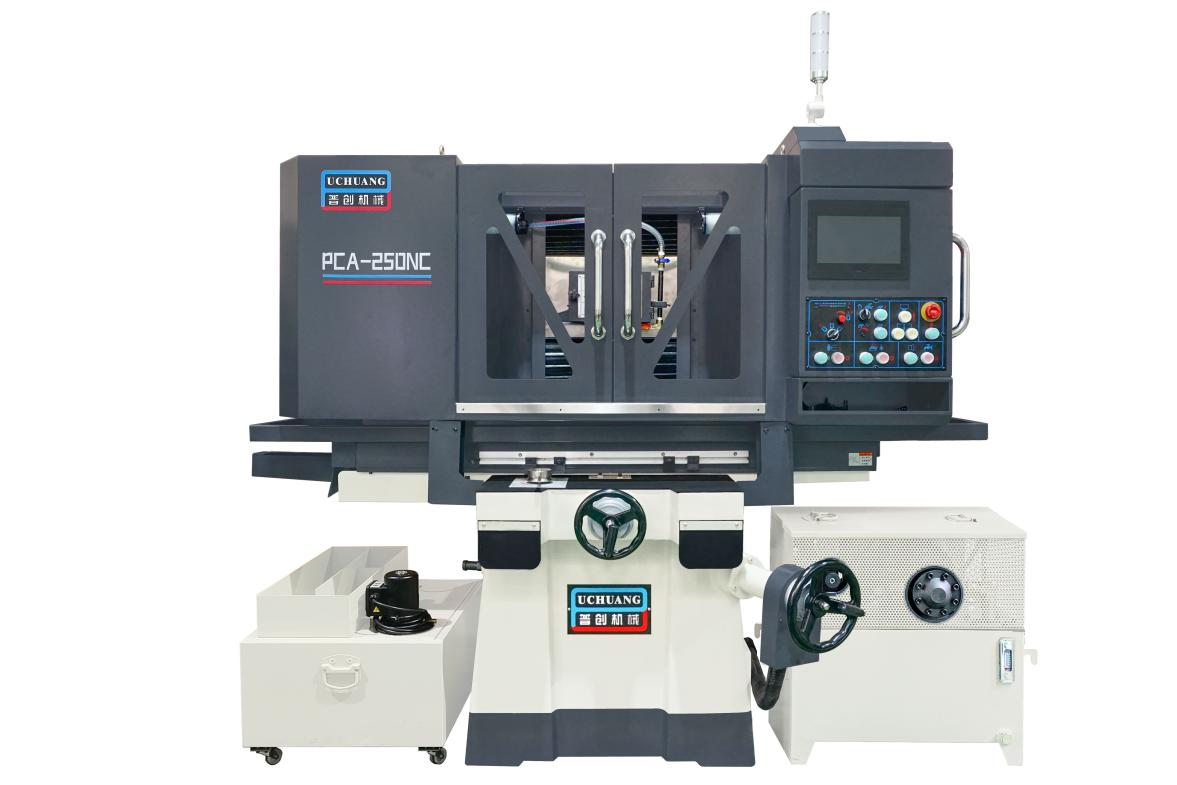
1 Understand Your Mold Grinding Requirements
Before selecting a surface grinder, you should first analyze your actual production requirements.
Consider the following questions:
What type of molds do you manufacture?
Different industries have different grinding requirements:
- Plastic injection molds
- Die casting molds
- Stamping dies
- Precision punches and dies
- Automotive molds
- Electronic component molds
For example:
- Small precision mold inserts require high accuracy and fine surface finish.
- Large mold plates require a machine with larger table size and stronger grinding capability.
What are your workpiece dimensions?
The machine size should match your largest workpiece.
Important specifications include:
- Maximum grinding length
- Maximum grinding width
- Maximum distance between spindle center and table
- Maximum workpiece weight
For example:
A mold workshop producing medium-size mold plates may choose a:
600 × 1200 mm precision surface grinder
while manufacturers producing larger dies may require:
800 × 2000 mm or larger surface grinding machines.
Choosing a machine that is too small will limit future production capability.
2 Choose the Right Type of Surface Grinder
There are several types of surface grinders available for mold manufacturing.
Manual Surface Grinder
A manual surface grinder is suitable for:
- Tool rooms
- Repair workshops
- Small batch mold production
- Precision fitting work
Advantages:
✔ Lower investment cost
✔ Simple operation
✔ Easy maintenance
✔ Suitable for skilled operators
Manual grinders are still widely used in mold shops because experienced operators can achieve excellent precision.
Automatic Surface Grinder
An automatic surface grinder provides:
- Automatic table movement
- Automatic cross feed
- Automatic down feed control
Advantages:
✔ Higher productivity
✔ More consistent grinding quality
✔ Reduced operator workload
It is suitable for mold manufacturers requiring repeated grinding operations.
CNC Surface Grinder
A CNC surface grinder is recommended for:
- High precision mold production
- Complex grinding processes
- Mass production
Advantages:
✔ Programmable grinding cycles
✔ Automatic compensation
✔ Better consistency
✔ Reduced dependence on operator skills
For companies producing high-value precision molds, CNC grinding machines can significantly improve efficiency.
3 Check Machine Accuracy and Rigidity
Accuracy is the most important factor when choosing a mold grinding machine. A precision surface grinder should provide:
Flatness Accuracy
The machine should maintain stable flatness over the entire grinding area.
Typical Requirements:
- 0.005 mm / 1000 mm
- Higher accuracy for precision mold applications
Surface Finish Capability
Mold components often require excellent surface quality.
Grinding Target:
Ra 0.8–1.6 μm under proper conditions
The final surface finish depends on:
- Workpiece material
- Grinding wheel type
- Grinding parameters
- Coolant system
- Operator experience
Machine Structure
The rigidity of the machine directly affects grinding accuracy. Important factors include:
Heavy cast iron base
- Reduce vibration
- Improve stability
- Maintain long-term accuracy
Precision guideways
- Smooth movement
- Better repeatability
- Longer service life
4 Consider Spindle Performance
The grinding spindle is the heart of a surface grinder. When selecting a machine, check:
Spindle accuracy
A high-precision spindle ensures:
- Lower vibration
- Better surface finish
- Longer grinding wheel life
Spindle motor power
The required power depends on:
- Material hardness
- Grinding wheel size
- Material removal rate
For mold steel grinding, sufficient spindle power helps maintain stable performance.
5 Select the Correct Grinding Wheel System
The grinding wheel selection has a major influence on mold grinding quality. Common grinding wheels include:
Aluminum oxide wheels
Suitable for:
- General tool steel
- Mold steel
CBN wheels
Suitable for:
- Hardened steels
- High precision applications
Diamond wheels
Suitable for:
- Carbide
- Non-ferrous hard materials
Before purchasing a surface grinder, confirm whether the machine supports your required grinding wheels.
6 Check Additional Features for Mold Production
Modern mold manufacturers often require additional functions. Useful options include:
Automatic lubrication
Benefits:
- Protects guideways
- Reduces maintenance
- Improves machine lifetime
Magnetic chuck
A reliable chuck helps:
- Secure the workpiece
- Improve grinding stability
- Increase operator efficiency
Coolant filtration
A good coolant system helps:
- Control temperature
- Improve surface finish
- Extend wheel life
Automatic dressing
For high-volume production:
- Maintains wheel condition
- Improves consistency
- Reduces manual adjustment
7 Consider After-Sales Support and Spare Parts
For overseas mold manufacturers, machine quality is not the only consideration. You should also evaluate:
- Availability of spare parts
- Technical support
- Operation training
- Response time from the supplier
A reliable supplier should provide:
- ✔ Installation guidance
- ✔ Machine operation training
- ✔ Electrical drawings
- ✔ Spare parts support
- ✔ Remote technical assistance
8 Chinese Precision Surface Grinders for Mold Making
Chinese surface grinder manufacturers have become increasingly popular worldwide because they offer:
- Competitive prices
- Good precision performance
- Reliable structures
- Flexible customization
Many mold manufacturers choose Chinese grinding machines because they provide a good balance between:
- Investment cost
- Accuracy
- Long-term reliability
When selecting a Chinese supplier, buyers should focus on:
- Factory experience
- Machine testing process
- Export experience
- Customer references
Conclusion: How to Choose the Best Surface Grinder for Mold Making?
Choosing the right precision surface grinder for mold making depends on several factors:
- ✔ Mold size and weight
- ✔ Required accuracy
- ✔ Surface finish requirements
- ✔ Production volume
- ✔ Automation level
- ✔ Machine rigidity
- ✔ Supplier support capability
For small mold workshops, a manual or automatic surface grinder may be the best choice.
For high-precision and mass production mold manufacturers, a CNC surface grinder with automatic functions can provide better efficiency and consistency.
A properly selected surface grinding machine will not only improve mold quality but also reduce production costs and increase competitiveness.
Need a Precision Surface Grinder for Your Mold Workshop?
We provide precision surface grinding solutions for mold manufacturers worldwide, including manual, automatic, and CNC surface grinders.
Contact us with your:
- Workpiece size
- Material
- Accuracy requirement
- Production needs
Our engineers can recommend the most suitable grinding machine for your application.
Post time: Aug-11-2026

