
Sinker EDM, also known as Ram EDM or Die-Sinking EDM, is an important machining process for molds, dies and precision components with complex cavities.
While CNC milling is highly efficient for many machining tasks, some shapes become difficult to produce with conventional cutting tools—especially deep cavities, narrow ribs, small internal details and hardened conductive materials.
This is where Sinker EDM becomes particularly useful.
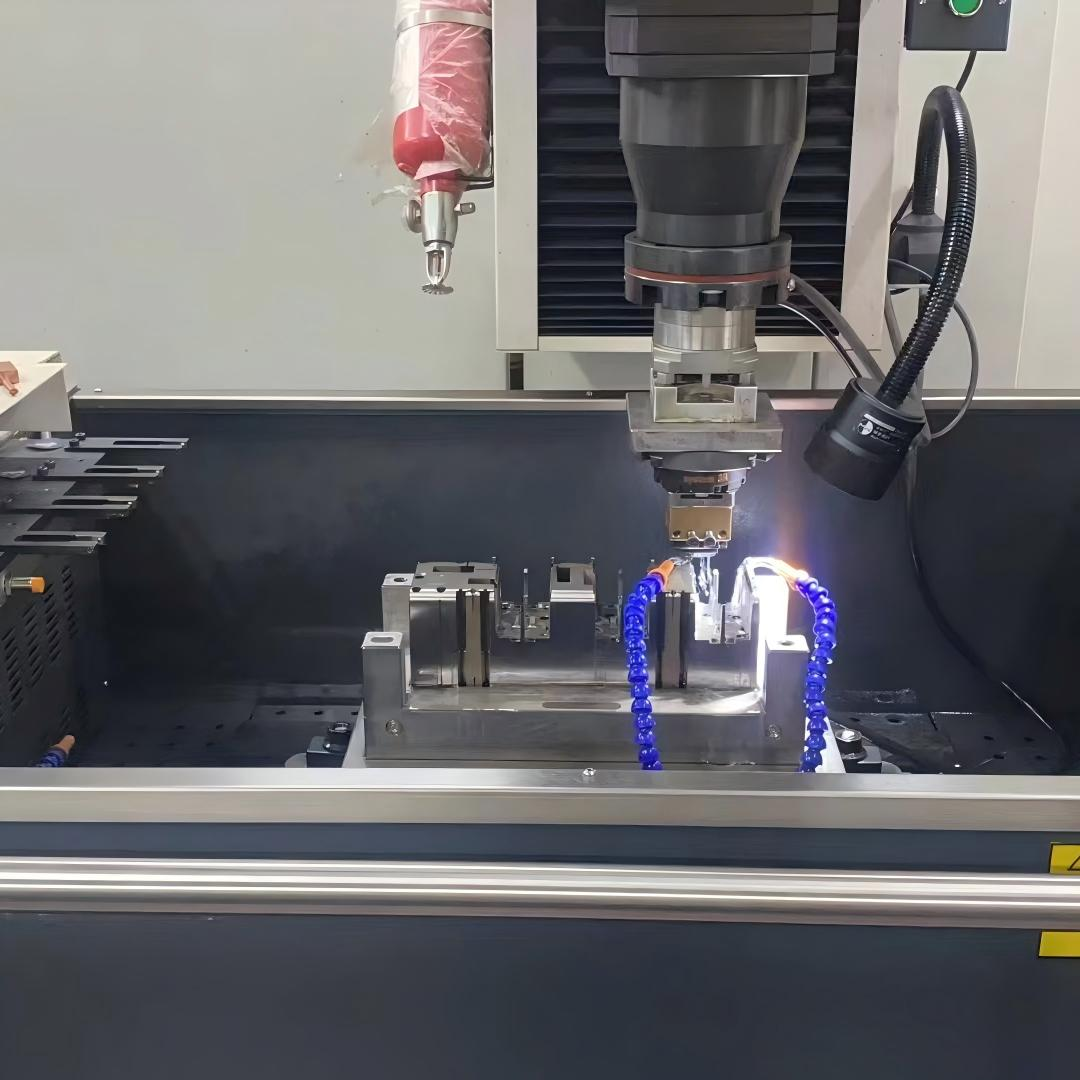
How Does Sinker EDM Work?
Instead of cutting the workpiece with a rotating tool, Sinker EDM uses controlled electrical discharges between a shaped electrode and an electrically conductive workpiece.
The electrode is normally manufactured according to the geometry that needs to be produced. During machining, electrical discharges remove small amounts of material from the workpiece until the required cavity or shape is formed.
Because the electrode and workpiece do not perform conventional mechanical cutting against each other, EDM can machine hard conductive materials and complex features that may be difficult to reach with milling tools.
When Should You Consider Sinker EDM?
Sinker EDM is especially useful when the workpiece requires features such as:
● Deep cavities
● Narrow slots or ribs
● Complex mold shapes
● Small internal details
● Difficult-to-reach areas
● Machining after the material has already been hardened
For simple and open geometries, conventional milling may be more economical and faster.
For this reason, EDM should not be considered a replacement for every milling operation. In many mold shops, milling and EDM complement each other: milling removes most of the material efficiently, while EDM handles features that are difficult or impractical to finish mechanically.
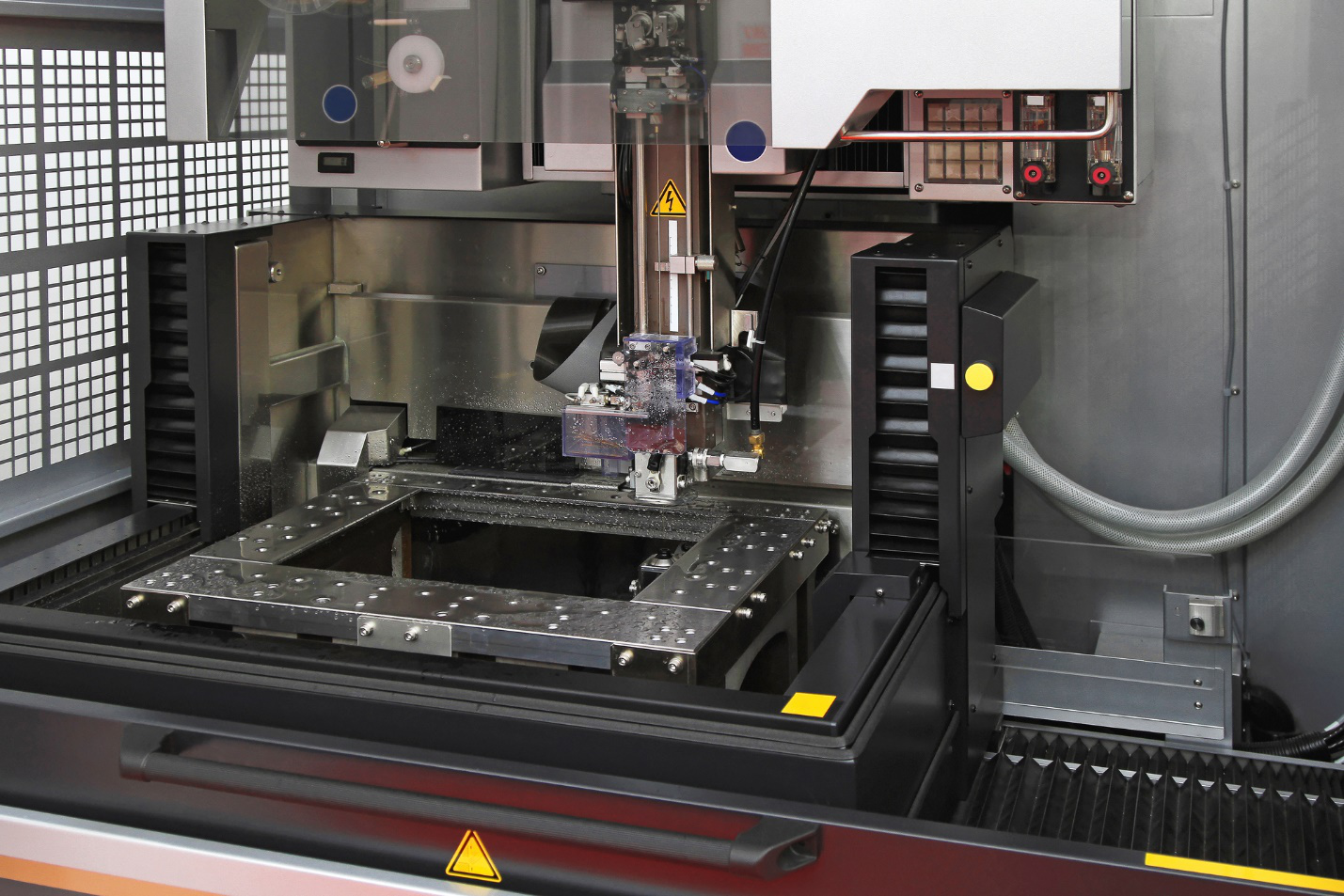
What Information Do Buyers Usually Need to Provide?
A common mistake is to ask:
“How much is a Sinker EDM machine?”
before defining the actual workpiece.
Machine price is closely related to machine size, travel, control configuration, machining capacity and automation level.
Before selecting a machine, buyers should ideally provide:
● Workpiece dimensions
● Maximum workpiece weight
● Cavity dimensions and depth
● Workpiece material
● Electrode material and dimensions
● Required surface quality
● Required machining accuracy
● Estimated production quantity
● Automation requirements
A mold drawing is particularly useful because two molds of similar external size may require very different EDM capabilities.
Why Are Surface Finish and Electrode Wear Important?
For mold manufacturers, completing the cavity is only part of the job.
The surface condition after EDM can directly affect the amount of subsequent polishing and finishing work required. At the same time, the electrode gradually wears during the EDM process.
This means buyers should evaluate more than just the maximum machining size.
Important production questions include:
● What surface finish is required?
● How many electrodes will be needed?
● How much electrode wear is acceptable?
● How long will the EDM cycle take?
● Does the mold require rough and finish machining?
● Will the machine run during unattended shifts?
The balance between machining speed, surface quality and electrode consumption can have a major influence on the total production cost.
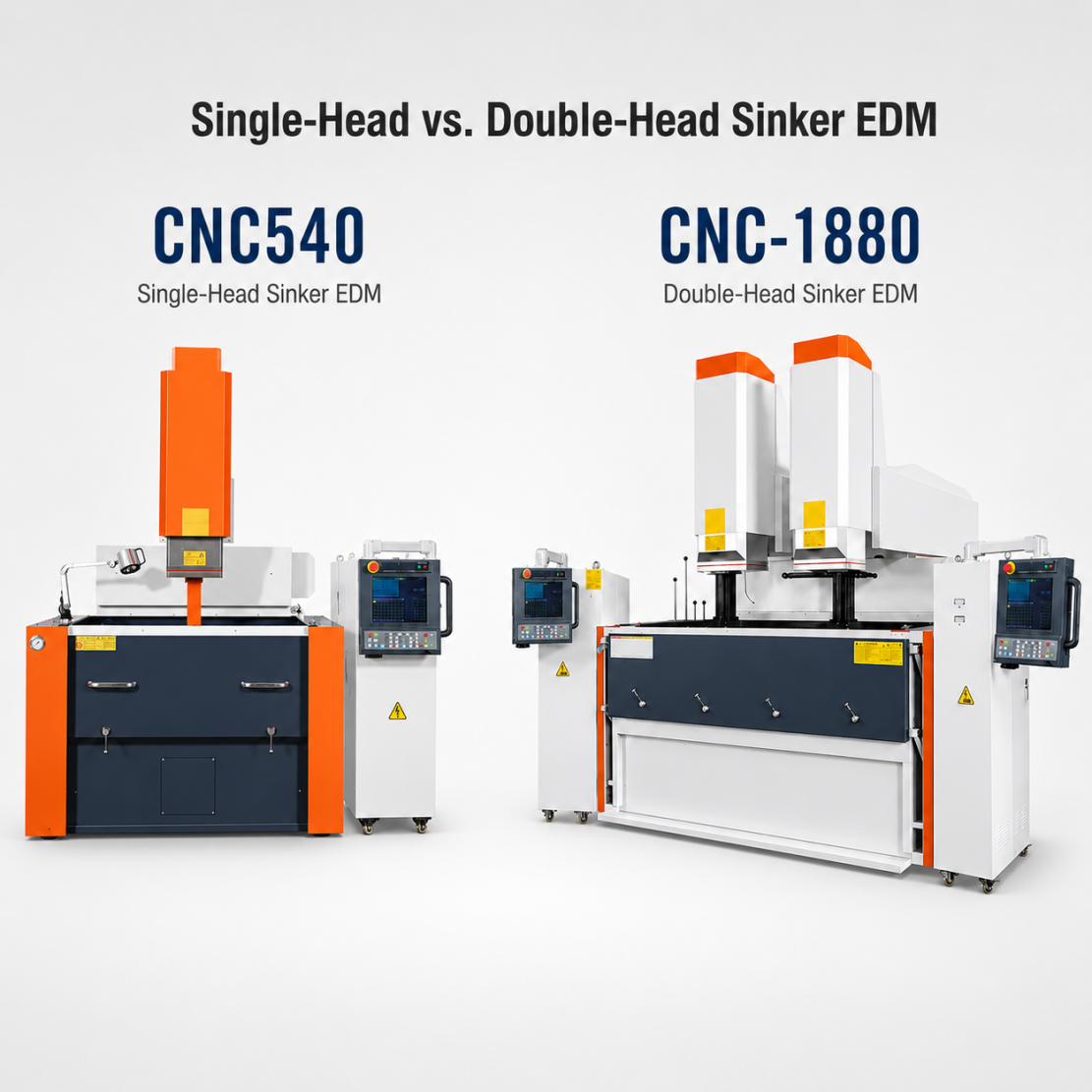
Single-Head or Double-Head EDM?
For many standard molds and components, a single-head Sinker EDM is sufficient.
However, as workpieces become larger and EDM workloads increase, buyers may begin to consider larger or double-head machine configurations.
The CNC1880 Double-Head Ram EDM is designed specifically for large-mold and large-workpiece EDM applications.
The purpose of choosing a double-head machine is not simply to have a “larger machine.” The decision should be based on the actual mold dimensions, cavity arrangement, electrode requirements and expected production method.
For smaller workpieces or simpler cavity machining, purchasing an oversized machine may not provide a meaningful advantage.
Is Automation Necessary?
Automation is another area buyers should consider carefully.
A workshop producing occasional molds has very different requirements from a manufacturer running repeated EDM operations every day.
For higher production requirements, buyers may pay more attention to functions such as:
● CNC machining cycles
● Automatic electrode/tool changing
● Multi-electrode machining
● Unattended operation
● Stable machining over long cycles
The key question is not simply whether a machine is “automatic,” but how much operator involvement is required during the complete EDM process.
For example, if the machine is expected to continue machining overnight, buyers should ask how electrodes are managed, what happens when one machining operation is completed and what safety or monitoring functions are available.
Workpiece Capacity Should Match the Actual Mold
Another important selection factor is the relationship between:
workpiece size + workpiece weight + machine travel + electrode working space.
The largest external dimensions of the mold alone do not tell the whole story.
A buyer should also consider where the cavity is located, how the workpiece will be clamped, how much electrode movement is required and whether enough clearance is available above the workpiece.
This is particularly important for large molds and heavy workpieces.
Compare Machine Configurations, Not Only Prices
Two Sinker EDM machines may look similar but use different control systems, machine structures, electrode configurations and automation options.
Therefore, when comparing quotations, buyers should make sure they are comparing machines based on the same requirements.
A lower purchase price does not necessarily mean a lower production cost if the machine requires more electrodes, longer operator involvement or additional finishing work.
Likewise, the most expensive or largest machine is not automatically the best choice.
The correct machine is the one that matches the actual mold, required quality and production plan.
A Drawing Makes Machine Selection Much Easier
Before requesting a final quotation, buyers are encouraged to provide:
● Mold or workpiece drawing
● Workpiece material
● Overall dimensions
● Maximum weight
● Cavity dimensions
● Required surface finish
● Electrode information
● Expected production quantity
With this information, the supplier can recommend a more suitable Sinker EDM configuration instead of choosing a machine only according to a general size range.
For EDM applications, good machine selection begins with understanding the workpiece.
Email : sales6@dgbica.com
Tel/WhatsApp: +86 172-0031-5617
Contact: Yumi
Post time: Aug-27-2026

