
Small-hole EDM drilling is widely used when manufacturers need to produce small, deep or difficult holes in electrically conductive materials. It is especially useful when conventional drilling becomes difficult because of material hardness, hole depth, small diameter or an irregular workpiece surface.
Unlike a conventional drill, an EDM drilling machine removes material through controlled electrical discharges between a tubular electrode and the workpiece. The electrode does not cut the metal mechanically, which makes EDM drilling suitable for many hardened and difficult-to-machine conductive materials.
What Materials Can an EDM Drilling Machine Process?
One of the first questions buyers usually ask is whether EDM can machine their particular material.
The key requirement is electrical conductivity. Depending on the application and machine configuration, EDM drilling can be used for materials such as:
● Hardened steel
● Stainless steel
● Carbide
● Copper
● Aluminum
● Other electrically conductive metals and alloys
This is one reason EDM drilling is often used in mold manufacturing, precision machining, automotive components and other applications involving hard materials or small holes.
However, material is only the first piece of information needed for machine selection. Buyers should also provide the material grade, workpiece thickness and required hole specifications whenever possible.
Hole Diameter Is Not the Only Important Specification
When purchasing a small-hole EDM machine, many buyers initially provide only the required hole diameter.
For example:
“I need to drill a 2 mm hole.”
This information is useful, but it is not enough to determine the most suitable machine.
A supplier will normally also need to know:
● Required hole diameter and tolerance
● Hole depth or workpiece thickness
● Whether the hole is through or blind
● Workpiece material
● Whether the entry surface is flat, inclined or curved
● Required production quantity
● Whether the machine will be operated manually or needs a higher level of automation
These details directly affect electrode selection, machining parameters and machine configuration.
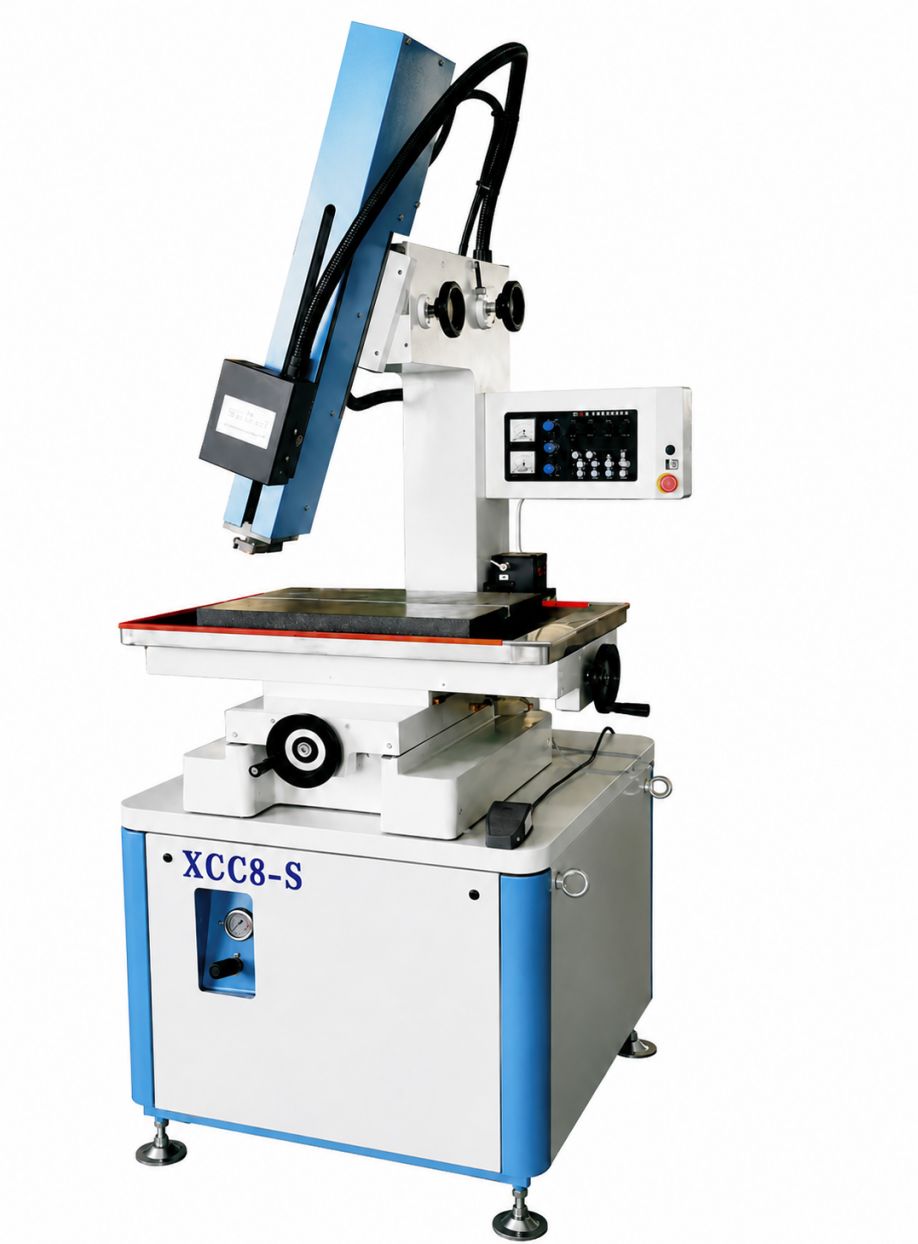
For example, the XCC8-S series covers a hole diameter range of 0.3–3.0 mm and is designed for a depth-to-diameter ratio of more than 300:1. Its machining speed is listed as 10–70 mm/min under applicable machining conditions.
This type of capability makes small-hole EDM particularly useful when a conventional drill would have difficulty reaching the required depth with a small tool diameter.
Can EDM Drill from an Inclined or Curved Surface?
This is another practical question that is sometimes overlooked during the first inquiry.
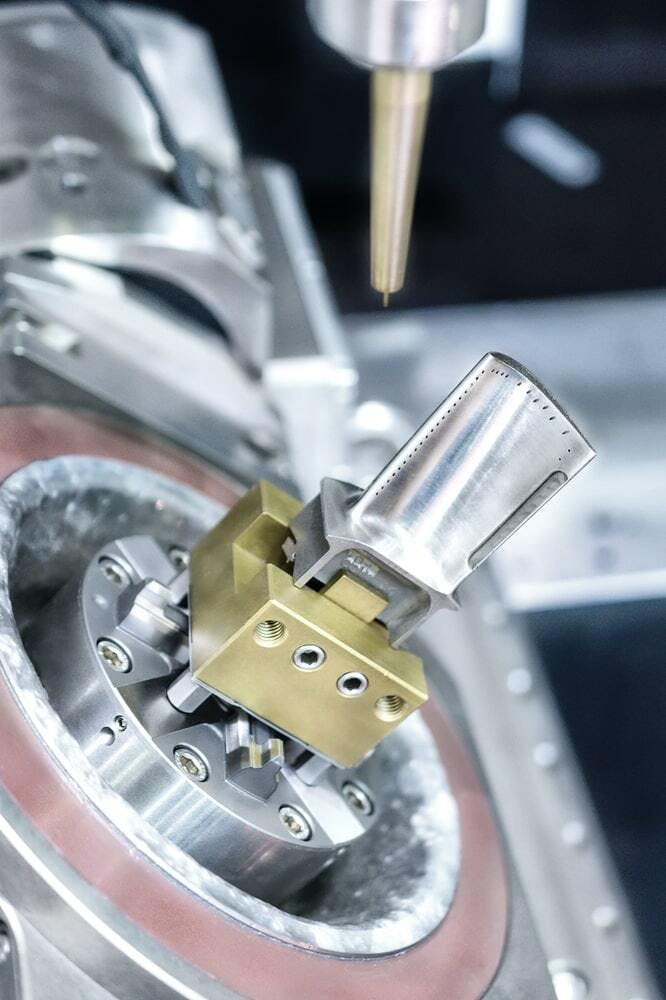
A standard straight-hole requirement is quite different from drilling a hole that starts from an inclined or curved surface. Buyers should therefore show the supplier a drawing or photo of the actual workpiece instead of providing only the hole diameter.
For applications requiring non-flat entry surfaces, suitable EDM drilling configurations can offer greater flexibility. The XCC8-S series, for example, can start machining from inclined and curved surfaces.
If an angled hole is required, this should be confirmed before quotation because not every EDM drilling machine has the same angular machining capability.
What Happens When the Electrode Breaks Through the Workpiece?
For production users, machine behavior after breakthrough is also important.
Some buyers expect the machine to drill one hole and then continue working without an operator. Others only need the machine to automatically complete the current hole and stop.
These are two different requirements.
Before purchasing, buyers should therefore ask:
What exactly happens after the hole is completed?
Depending on machine type and automation level, the machine may retract after completing the hole and wait for the operator, while a more automated system may continue to another hole or use automatic electrode/tool handling.
If unattended production is important, the buyer should clearly provide the required production quantity and expected unattended running time. Automatic tool changes, guide changes and other automation functions can become important when a machine is expected to run for longer periods without operator intervention.
Workpiece Size and Weight Also Matter
Even when the required hole is very small, the actual workpiece may be large and heavy.
Therefore, buyers should check not only the drilling range but also:
● Worktable dimensions
● Maximum table load
● X/Y/Z travel
● Maximum distance between the drilling head and worktable
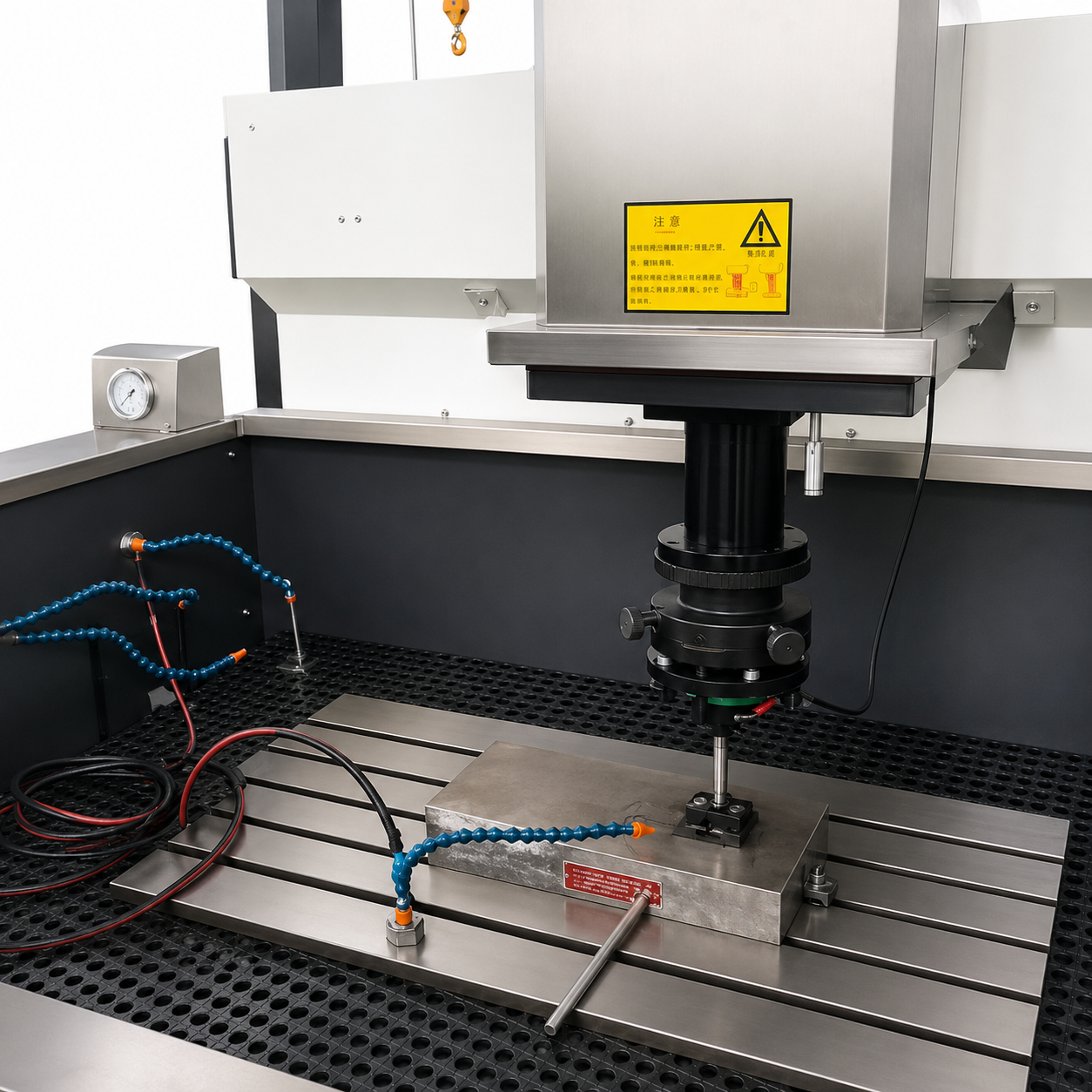
For example, the XZ6-Z EDM drilling machine has a 500 × 370 mm worktable with a maximum loading capacity of 200 kg. Its X/Y travel is 370 mm and Z travel is 390 mm.
These specifications help determine whether the actual component can be positioned correctly on the machine.
Don’t Forget the Electrode
The electrode is a consumable part of the EDM drilling process.
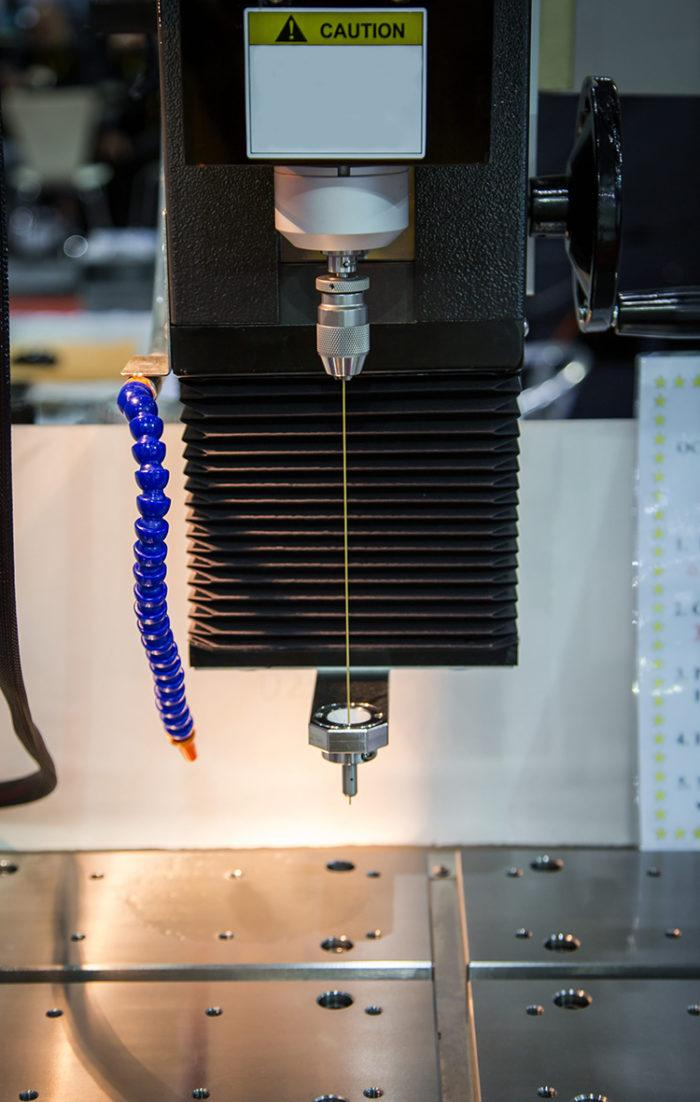
Different hole diameters normally require suitable electrode sizes, and electrode wear should be considered when estimating production requirements. For repeated production, buyers should ask about electrode availability, guide sizes and spare consumables before placing an order.
This becomes particularly important for overseas users because consumables and spare parts may need to be prepared together with the machine.
What Information Should You Send Before Requesting a Quotation?
A good EDM drilling inquiry does not need to be complicated.
Providing the following information will usually make machine selection much faster:
1. Workpiece material
2. Required hole diameter
3. Hole depth or material thickness
4. Hole tolerance, if required
5. Straight or angled hole
6. Workpiece dimensions and weight
7. Number of holes per workpiece
8. Estimated production quantity
9. Required level of automation
A workpiece drawing or sample photo is even more helpful.
Selecting an EDM drilling machine should start with the actual machining task rather than simply comparing machine prices. The more clearly the application is defined, the easier it is to choose the correct machine, electrode and configuration.
If you have specific EDM machining requirements, providing your workpiece drawing, material, hole/cavity dimensions and production needs will help us recommend a more suitable machine configuration.
Email : sales6@dgbica.com
Tel/WhatsApp: +86 172-0031-5617
Contact: Yumi
Post time: Aug-28-2026

