
In the fields of large-scale mechanical processing, mold manufacturing, and heavy equipment production, large gantry grinders serve as core equipment for high-precision surface grinding. Featuring a large stroke, high rigidity, and superior accuracy, they are the preferred solution for grinding large workpieces. Many manufacturing enterprises focus on the performance characteristics, application scope, and selection guidelines of large gantry grinders during equipment procurement and process upgrading. This article comprehensively introduces the core knowledge, processing advantages, application scenarios, selection tips, and daily maintenance methods of large gantry grinders, helping enterprises understand the equipment and make accurate selections efficiently.
1. Definition and Core Structure of Large Gantry Grinders
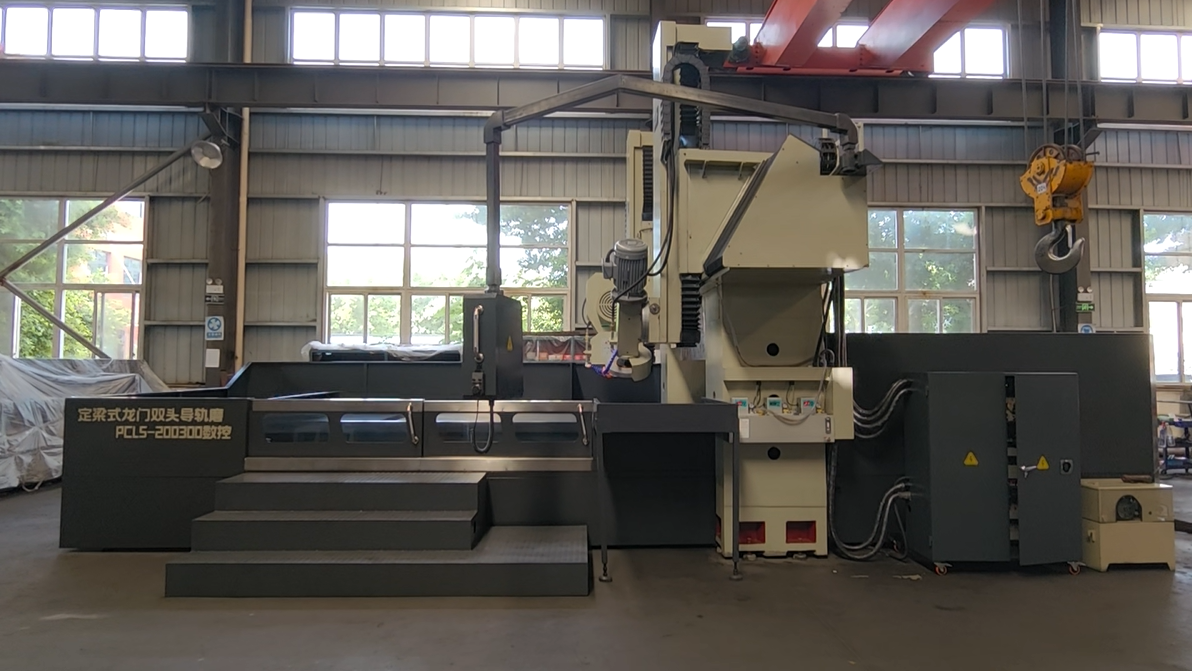
Also known as large gantry surface grinders, large gantry grinders are high-precision grinding equipment with a gantry frame structure. Different from small ordinary surface grinders, they are specially designed for surface grinding, fine grinding, and polishing of large-size, heavy-weight, and high-hardness workpieces. Adopting a fixed worktable and movable gantry beam structure, the equipment operates stably with strong load-bearing capacity, perfectly meeting the large-scale processing demands of the heavy industry.
Its core structure consists of four major modules, which guarantee the equipment’s processing accuracy:
• Gantry Frame Main Body: Made of high-strength cast iron with integral casting molding, it features high rigidity and excellent shock resistance. It is not easy to deform during long-term operation, ensuring stable processing of large workpieces.
• Precision Grinding Spindle: Equipped with a high-speed and high-precision servo spindle, it enables stable feeding and uniform grinding texture, greatly improving the surface finish of workpieces.
• Extra-Long Load-Bearing Worktable: The worktable size can be customized on demand. With strong load-bearing capacity, it can support large workpieces weighing several tons to dozens of tons, adapting to various large-scale processing needs.
• CNC Control System: Mainstream models are equipped with fully automatic CNC systems, supporting one-click programming, automatic grinding, and precise positioning. It reduces manual errors and improves processing efficiency effectively.
2. Core Advantages of Large Gantry Grinders Over Ordinary Grinders
Compared with hand-cranked grinders, small surface grinders, and vertical grinders, large gantry grinders are optimized for heavy-duty processing scenarios. Their core advantages cover accuracy, efficiency, and adaptability, perfectly solving the pain points of traditional grinders such as inability to process large workpieces, insufficient accuracy, and easy deformation.
2.1 Ultra-Large Processing Stroke for Large Workpieces
Breaking the stroke limitations of ordinary grinders, large gantry grinders can process large plates, molds, racks, guide rails and other workpieces with a length of more than 2 meters and a width of more than 1 meter. One-time clamping completes full-surface grinding without split processing, avoiding accuracy deviation caused by repeated clamping, making it exclusive equipment for finishing large workpieces.
2.2 High Rigidity and Stability with Outstanding Processing Accuracy
The integral gantry frame structure bears force evenly with excellent shock resistance, ensuring no jitter or offset during grinding. The positioning accuracy and repeated positioning accuracy of the equipment reach the micron level. Processed workpieces feature high flatness and parallelism, with surface finish up to Ra0.8-Ra1.6, fully complying with the high-precision processing standards for precision molds and heavy-duty equipment.
2.3 Fully Automatic CNC Operation for Higher Efficiency
Modern large gantry grinders adopt intelligent CNC control, supporting automatic feeding, automatic speed regulation, segmented grinding, and batch processing without repeated manual calibration and positioning. Compared with traditional manual grinders, the processing efficiency is increased by 3-5 times, while reducing manual operation difficulty and adapting to enterprises’ large-scale production needs.
2.4 High Durability for Heavy-Duty Working Conditions
The core components of the equipment are made of wear-resistant and deformation-resistant materials. It can adapt to long-term high-intensity grinding of hard workpieces such as steel, cast iron, and alloys. With low failure rate and long service life, it supports 24-hour continuous factory production and greatly reduces equipment replacement and maintenance costs.
3. Main Industries and Application Scenarios of Large Gantry Grinders
With the characteristics of large stroke, high precision, and strong load-bearing capacity, large gantry grinders are widely used in core fields of heavy industry manufacturing and precision processing, serving as indispensable finishing equipment for many industries. The core application scenarios are as follows:
• Mold Manufacturing Industry: Precision surface grinding, polishing, and repair processing of large plastic molds, die-casting molds, and stamping molds to ensure mold flatness and tightness.
• Heavy Machinery Industry: Surface grinding and leveling processing of machine tool beds, gantry racks, large guide rails, and construction machinery parts.
• Plate Processing Industry: Precision surface grinding, deburring, and mirror polishing of large steel plates, stainless steel plates, and alloy plates.
• New Energy and Auto Parts Industry: High-precision grinding of large new energy equipment racks, large automobile molds, and precision auto parts.
• Aerospace and Precision Equipment Industry: Micron-level finishing of large precision parts, tooling fixtures, and testing jigs.
4. Core Selection Guidelines for Large Gantry Grinders (Avoid Pitfalls)
The market features large gantry grinders with uneven models and configurations. Enterprises should not only focus on price during selection. It is necessary to combine actual processing needs and focus on core parameters and configurations to avoid adverse impacts on production caused by improper selection.
4.1 Match Processing Stroke and Load-Bearing Capacity
Select equipment according to the maximum length, width and single weight of daily processed workpieces. It is recommended to reserve a 10%-20% stroke margin to prevent workpieces from exceeding the processing range. Meanwhile, confirm the worktable load-bearing capacity to adapt to long-term processing of heavy workpieces and avoid worktable deformation.
4.2 Verify Core Processing Accuracy Parameters
Focus on the equipment’s positioning accuracy, repeated positioning accuracy, and surface grinding accuracy. Select high-end models with higher accuracy for precision processing scenarios, and standard models for ordinary leveling processing to control costs based on actual demands.
4.3 Check Materials and Brands of Core Components
Spindles, guide rails, lead screws, and control systems are the core components of the equipment. Priority should be given to products with well-known brand accessories and high-strength cast iron fuselages, so as to prevent accuracy attenuation and shortened service life caused by inferior materials.
4.4 Select Automatic Configuration Based on Working Conditions
Fully automatic CNC large gantry grinders are recommended for batch and high-precision processing, supporting program storage and batch replication. Semi-automatic models are suitable for small-batch and multi-category processing, balancing practicality and cost performance.
4.5 Inspect Manufacturer Strength and After-Sales Service
As large-scale industrial equipment, large gantry grinders rely heavily on professional installation, commissioning and after-sales maintenance. Priority should be given to original manufacturers with independent production, commissioning and after-sales capabilities to ensure timely maintenance, parts replacement and fault handling in the later stage.
5. Daily Maintenance Skills to Extend the Service Life of Large Gantry Grinders
Large gantry grinders are high-precision precision equipment. Standard daily maintenance can effectively maintain processing accuracy, reduce failure rates and prolong service life. Enterprises can follow the maintenance specifications below:
• Daily Cleaning: Clean grinding residues on the worktable and guide rails after daily processing to prevent iron scraps and impurities from wearing guide rails and spindles, and keep the equipment surface clean.
• Regular Lubrication: Add special lubricating oil to guide rails, lead screws and transmission components regularly in accordance with the equipment manual to ensure smooth operation and reduce wear.
• Coolant Maintenance: Filter and replace grinding coolant in a timely manner to avoid deteriorated coolant and excessive impurities affecting grinding quality and causing component corrosion.
• Accuracy Calibration: Calibrate the equipment’s flatness and positioning accuracy monthly, and adjust deviations in a timely manner to ensure stable processing accuracy of workpieces.
• Circuit System Inspection: Regularly check the status of CNC systems, circuits and motors to avoid aging circuit faults and ensure safe and stable equipment operation.
6. Summary
With the core advantages of large stroke, high rigidity, high precision and high efficiency, large gantry grinders are core equipment for surface finishing of large workpieces, widely applied in mold, heavy machinery, auto parts, aerospace and other industries. Enterprises should make comprehensive selection based on workpiece size, processing accuracy and production conditions. Meanwhile, standardized daily maintenance can maximize equipment performance and improve processing quality and production efficiency. For customized large gantry grinders with different strokes and accuracy, you can consult us for targeted selection solutions.
Tel/WhatsApp/WeChat: +86 189-2577-9357 Email:sales8@dgbica.com
Post time: Sep-07-2026

