
If you’ve ever walked through a machine shop, you’ve probably heard someone say, “We’ll mill it first, then send it to grinding.” It sounds like a routine process, but it raises an interesting question.
If both milling and surface grinding remove material, why do manufacturers need two completely different machines? Wouldn’t one be enough?
The answer lies in what each process is actually trying to achieve.
Although surface grinding and milling often work on the same component, they are far from interchangeable. One is built for efficiency and shaping. The other is built for precision and perfection. Understanding the difference doesn’t just help engineers choose the right machine—it can also improve production efficiency, reduce costs, and avoid unnecessary machining problems.
Let’s take a closer look.
Milling Builds the Part
Imagine starting with nothing more than a solid block of steel.
Your first goal isn’t achieving a mirror-like finish or micron-level accuracy. You simply need to transform that raw material into something that resembles the final part. That’s exactly where milling comes in.
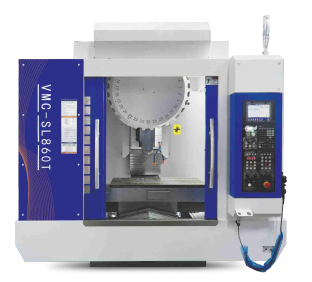
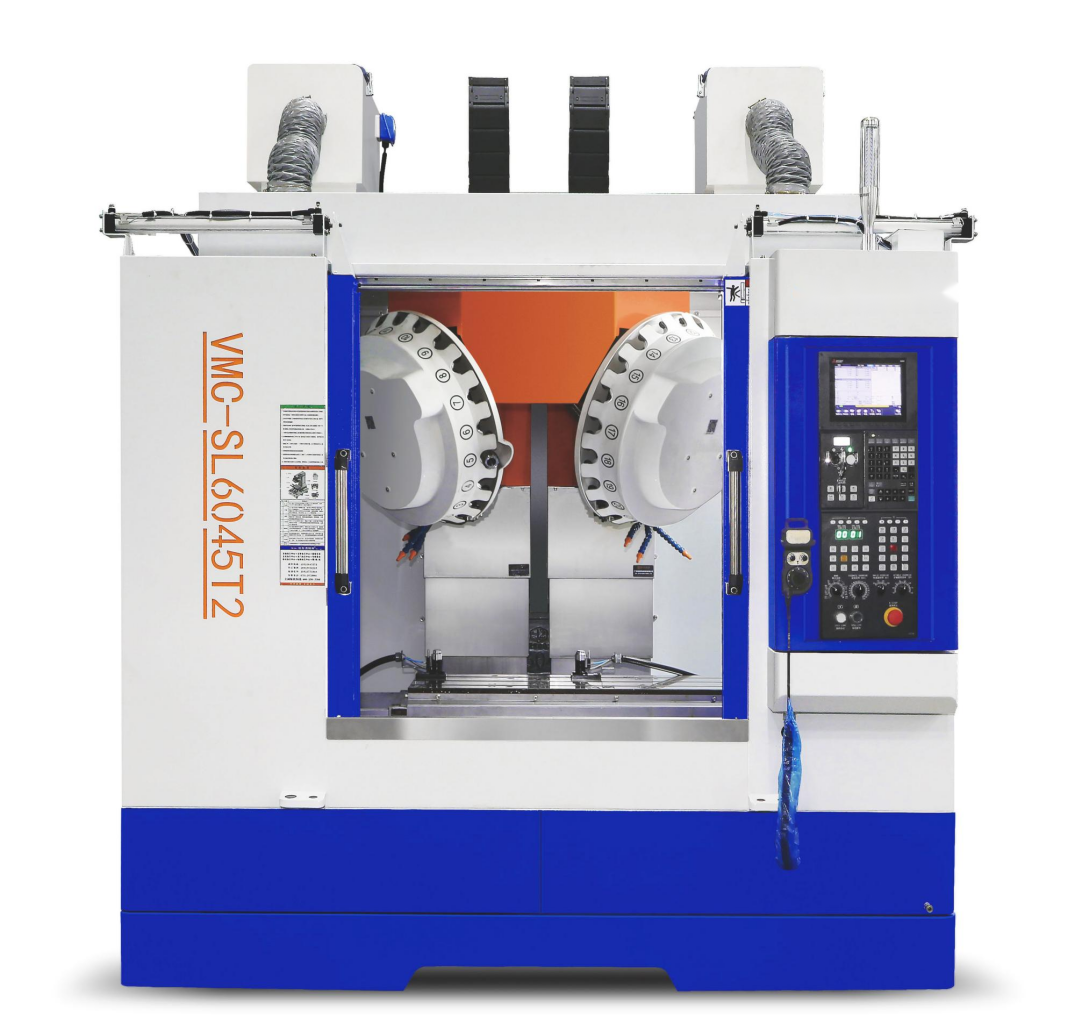
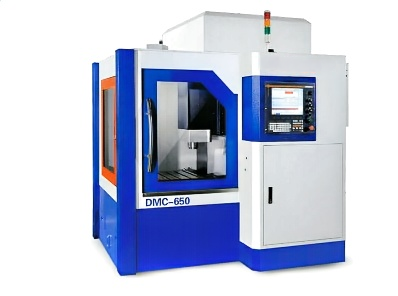
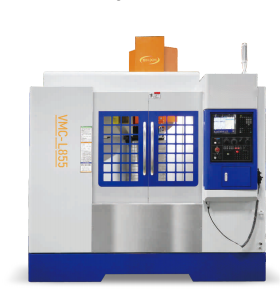
A CNC milling machine removes material quickly using rotating cutting tools. It cuts pockets, drills holes, machines slots, creates contours, and produces complex three-dimensional shapes with remarkable efficiency. Modern machining centers can complete operations in minutes that would have taken hours on conventional equipment.
If productivity were the only thing that mattered, milling would probably win every time.
But manufacturing is rarely that simple.
After the milling process is finished, take a closer look at the surface. You’ll usually notice faint cutter marks. The dimensions may already be within tolerance, but the surface isn’t perfectly flat, and tiny imperfections still remain.
For many components, that’s perfectly acceptable.
For others, it’s only the beginning.
Grinding Finishes the Job
Surface grinding exists because “almost perfect” isn’t always good enough.
Think about machine tool guideways, mold bases, precision fixtures, or hardened wear plates. These parts don’t just need to look good—they need to perform with exceptional accuracy for years.
This is where a surface grinding machine earns its place on the shop floor.
Instead of cutting with sharp tools, the grinding wheel removes microscopic amounts of material using thousands of abrasive grains. Each pass removes only a tiny layer, but together those passes create something milling simply isn’t designed to achieve: outstanding flatness, consistent dimensions, and an exceptionally smooth surface.
It may seem like a slower process, but that’s precisely the point.
Sometimes removing less material produces far better results.
A good grinding machine isn’t trying to reshape the workpiece. It’s refining it until every critical surface meets the required specification.
That’s why experienced machinists rarely see milling and grinding as competitors. One prepares the part. The other perfects it.
So Which One Is More Accurate?
If we’re talking purely about dimensional accuracy and surface finish, surface grinding has the advantage.
A precision grinding machine can routinely achieve tolerances measured in just a few microns while producing surfaces that are almost impossible to replicate with conventional milling alone.
That doesn’t mean milling lacks precision. Modern CNC machining centers are incredibly accurate and continue to improve every year. For most structural features, holes, pockets, and profiles, milling delivers excellent results.
The difference is that milling focuses on creating geometry.
Grinding focuses on refining geometry.
A simple example is mold manufacturing.
After rough and finish milling, the mold base already looks complete. Yet many manufacturers still send it to the grinder before assembly. Why? Because even microscopic cutter marks can influence assembly accuracy, wear resistance, and the overall quality of the finished mold.
In precision manufacturing, details matter.
Speed Isn’t Everything
Here’s a fun way to think about it.
Suppose you need to remove twenty millimeters of steel from a large workpiece.
Would you choose a surface grinder?
Probably not.
The grinding machine would still be working long after everyone else had gone home.
A machining center, on the other hand, would remove that material quickly and efficiently, allowing production to move to the next stage.
Now imagine the opposite situation.
The part is already machined, but the drawing specifies excellent flatness and a fine surface finish.
Removing another twenty millimeters isn’t the challenge anymore.
Removing the last few microns is.
That’s when the grinding machine becomes the hero of the workshop.
Different jobs require different strengths, and successful manufacturers know when to switch from speed to precision.
They Work Better Together
One of the biggest misconceptions is that manufacturers have to choose between milling and grinding.
In reality, most professional workshops use both.
A typical production process begins with milling, where the raw material is shaped into the desired form. Once the geometry is complete, the workpiece may undergo heat treatment before moving to the grinding department for final finishing.
It’s a workflow that’s been trusted for decades because it combines the strengths of both technologies.
Milling delivers efficiency.
Grinding delivers quality.
Together they produce components that meet demanding standards in industries such as aerospace, automotive, mold manufacturing, medical equipment, heavy machinery, and precision engineering.
Trying to replace one process with the other often creates more problems than it solves.
Final Thoughts
People sometimes ask whether surface grinding is better than milling.
That’s a little like asking whether a torque wrench is better than a socket wrench.
They’re built for different jobs.
If your goal is to remove material quickly, machine complex shapes, and maximize production efficiency, a CNC milling machine is the obvious choice.
If your priority is exceptional flatness, tight tolerances, and a superior surface finish, a precision surface grinding machine is hard to beat.
The most successful manufacturers don’t choose between the two.
They understand where each process fits into the production line and let each machine do what it does best.
At Bica CNC Machinery, we’ve spent years helping manufacturers find the right solution for their machining needs. From CNC surface grinding machines and cylindrical grinders to vertical machining centers, CNC lathes, and EDM machines, our goal isn’t simply to sell equipment—it’s to help customers build more efficient, more reliable production processes.
Because in manufacturing, the best results rarely come from using one perfect machine.
They come from using the right machine at the right time.
Post time: Aug-05-2026

